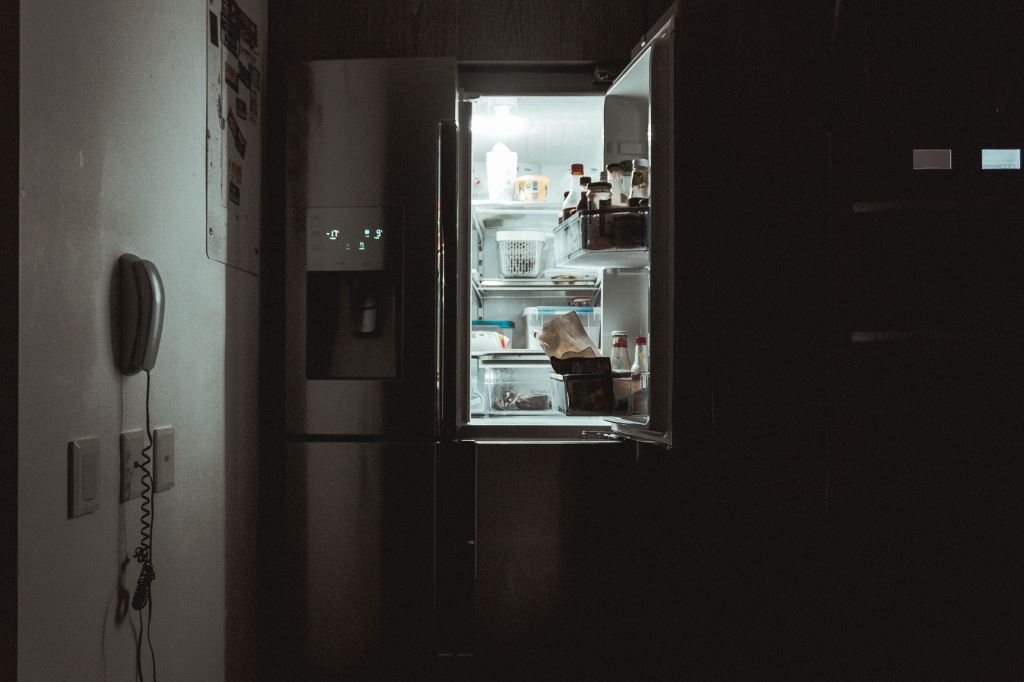
Refrigerators are very common in our day-to-day lives in first world countries. The benefits that are provided seem obvious enough, enabling storage of perishable items and providing water that is more filtered than tap water (at least in the United States of America). But what exactly is the process for filtration in refrigerators like? It usually occurs in 3 steps: Pre-filtration, Activated Carbon Filtration & Adsorption, and Filtered Water Dispensing.
Prefiltration
The water from your home water supply is directed into your refrigerator. This step involves a pre-filter element, usually made of a porous material (tiny spaces or holes where air or liquid may pass through) to capture large particles, sediment, and other debris from the water. This pre-filter medium is often made from synthetic materials. Once the water comes into contact with this medium, the medium captures large particles by physically trapping them in small openings of the medium, blocking their movement and stopping them from being dispensed or clogging the main filter.
Activated Carbon Filtration & Adsorption
This is the main filtration stage, which includes activated carbon (a porous form of carbon) that is treated to have a large surface area and a high compatibility for absorbing substances. This type of carbon is “activated” through methods such as heat or chemical treatments. The water from the previous stage now moves on to this main filter, where it comes into contact with the carbon’s surface, causing the contaminants to stick to its surface through the process known as adsorption (the process by which a solid holds molecules of a gas or liquid as a thin film). This stage removes contaminants such as Chlorine, Volatile Organic Compounds (VOCs), compounds that lead to unpleasant taste/color/smell, and certain metals, all of which are harmful to consume by humans.
Filtered Water Dispensing
Once the water has gone through Prefiltration and the Activated Carbon Filtration & Adsorption stage, it is dispensed through the refrigerators water system, leading to cleaner and healthier water for consumption.
The Importance of Understanding Filtration
An important disclaimer I must note is that these steps of the process to filter your water via refrigerator may vary depending on the manufacturer and country of origin. Not all refrigerators are made equally or similarly, and new innovations may merge or create new steps in an effort to minimize costs or make the water have less pollutants, respectively. Regardless, refrigerators can be seen as a necessity in a house for storing food and dispensing water at a given moment, yet the average consumer remains unaware of the workings behind filtered water and may take the water filtration process for granted. While this may not necessarily be bad (after all, trying to memorize the steps of every complex product you own may be a laborious task), you can, at the very least, appreciate your refrigerator and the steps it takes to provide you with clean water for nourishment. After all, being aware of what keeps us going may lead us to appreciate how far we are in technology and standards of living.
 Climate Change Blog
Very insightful and educational article! I had never really thought about my fringe filtration system but it’s interesting to know how it works !
LikeLiked by 1 person
MUY INTERESANTE,ME ENCANTO SABER TODOS LOS PROCEDIMIENTOS QUE SE DAN EN EL FILTRACION DE AGUA EN NUESTROS REFRIGERADORES,GRACIAS POR DARNOS ESTE CONOCIMIENTO ♥️♥️♥️♥️♥️♥️
LikeLiked by 2 people
We take for granted a lot of things, one of the important ones is access to clean water. It’s a privilege to even say you have a filter in your refrigerator to provide clean water. Another good read good stuff👍
LikeLiked by 1 person
Thanks for the info, we definitely take advantage of the inner workings of the things around us! How does this tie into climate change, is there a way to filter with less carbon footprint? Pun intended.
LikeLiked by 1 person
Very informative!
LikeLiked by 1 person
Thanks for choosing to read my article. It means a lot to me!
LikeLike
With a better understanding on how water filtration works we can learn to appreciate it and value the advances that are made to these processes in the future.
LikeLiked by 1 person
What a great post! Thank you for sharing on how new technology helps us have a better quality of water!
LikeLiked by 1 person
Muy interesante el artículo felicitaciones Alex sigue adelante
LikeLiked by 1 person
Great educational read. Very insightful.
LikeLiked by 1 person
Clean water is such a valuable resource that we often take for granted. Thanks for sharing this information and helping us reflect how lucky we are to have this technology readily available.
LikeLiked by 1 person
This information is so valuable, we sometimes underestimate how technology already helps us on a daily basis 🤗
LikeLiked by 1 person
Thanks for the information-rich Post, I didn’t know how this works because here in Austria we have clean tap water and so we usually don’t have those type of refrigerators.
Keep it up!
LikeLiked by 1 person
Great article! wow I never thought in detail about this process and the steps behind a cold and clean glass of water from the refrigerator. I learned something new today, thank you!
LikeLiked by 1 person
So insightful and full of usable information! Easy to read, keep up the great work! 👍 Alex!
LikeLike